Former pharma executive turns family’s challenge into hope for others
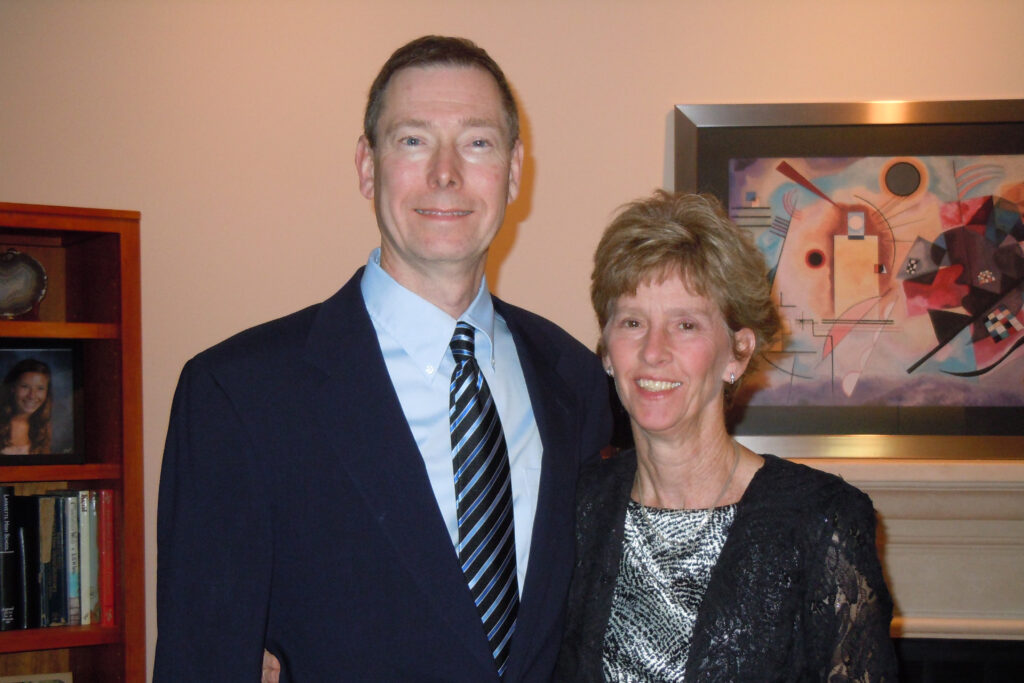
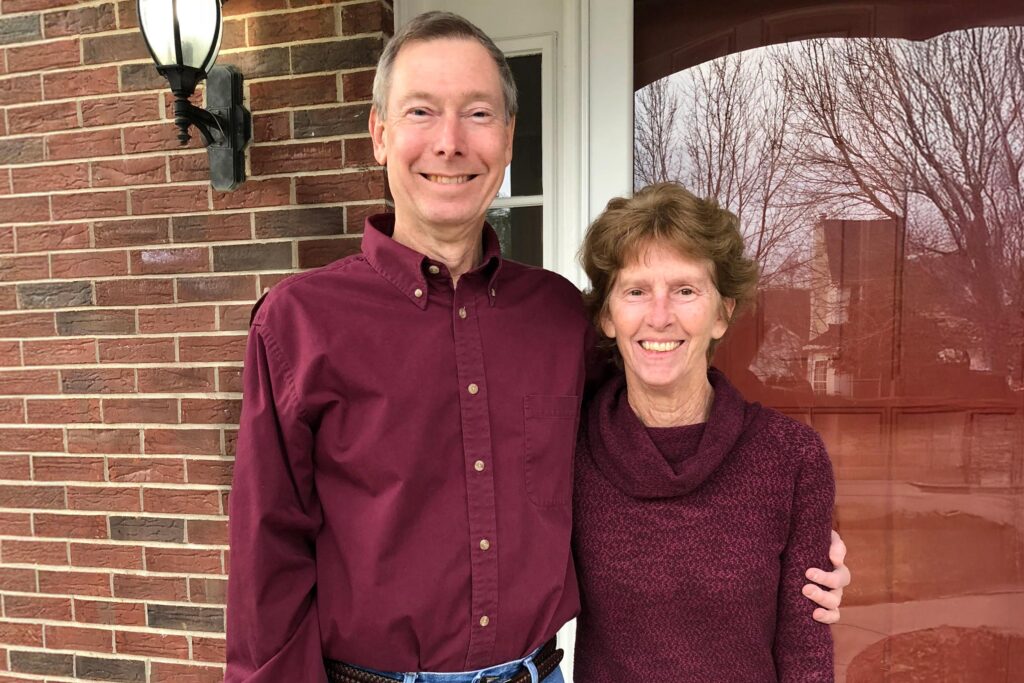
John Ludwig has watched his wife of nearly 40 years, Sue, slowly decline from Alzheimer’s disease since she was diagnosed in 2019 at age 64. The experience has brought home a painful reality: People like Sue — and the more than 7 million other Americans now living with Alzheimer’s — badly need better treatment options.
“There are medications that can slow progression a little if they’re started early enough, but that wasn’t an option for Sue,” Ludwig says. “By the time she was diagnosed, her disease was too advanced.”
“It’s been a long journey. After watching how Alzheimer’s destroys the sense of self, it’s very disheartening that we don’t have any effective treatments to stop this disease,” he adds.
That journey motivated him to take action. As a scientist who later guided teams and fueled innovation, he knew that meaningful treatment advances come from research — specifically, the deep, rigorous basic science that happens at leading universities. To honor Sue and help change the future of Alzheimer’s, he decided to invest in academic research through a philanthropic gift.
His first step was to determine which institution to trust with his support. He approached the question as any good scientist would: by scanning the scientific literature.
“I looked at labs all over — Boston, California, and other places,” he recalls. “But my research kept leading me back to Washington University in St. Louis.”
Wanting to see beyond the data on the page, Ludwig contacted renowned WashU Medicine Alzheimer’s researcher David M. Holtzman, MD. Their conversations confirmed for Ludwig that WashU had both the expertise and the scientific vision he was looking for.
Last August, Ludwig established spendable funds in the Departments of Neurology and of Pathology and Immunology that will support interrelated Alzheimer’s research projects led by Holtzman, the Barbara Burton and Reuben M. Morriss III Distinguished Professor of Neurology, and Jonathan Kipnis, PhD, the Alan A. and Edith L. Wolff Distinguished Professor of Pathology and Immunology and a BJC Investigator. Ludwig’s gift advances WashU’s efforts to promote healthier lives through With You: The WashU Campaign.
Speeding progress on a new frontier
Alzheimer’s disease is the most common cause of dementia later in life. Its incidence is rising rapidly, expected to reach 13 million people in the U.S. by 2050, with Alzheimer’s and other dementias costing the nation nearly $410 billion for health and long-term care each year according to the Alzheimer’s Association. The disease also exerts an unfathomable personal toll on patients and families.
WashU Medicine is home to one of the world’s largest and most influential Alzheimer’s disease research communities, working to find much-needed solutions. As head of the Charles F. and Joanne Knight Alzheimer Disease Research Center, Holtzman leads a pioneering team contributing many of the field’s major advances. He and WashU Medicine collaborators have studied key aspects of the proteins that drive disease — amyloid beta, APOE, and tau — mapped how Alzheimer’s progresses, developed diagnostic and research tools used worldwide, and contributed to the development of some of the drugs now available to slow progression.
Holtzman and Kipnis are now embarking on yet another frontier: exploring the role of the immune system in Alzheimer’s.
In 2023, Holtzman and Xiaoying Chen, PhD, an instructor in neurology, and colleagues showed for the first time that T cells from the immune system play a key role in neurodegeneration related to tau protein accumulation. The work points to the exciting possibility of blocking components of this T cell pathway as a new approach to treatment or even prevention.
With resources from Ludwig’s gift, Holtzman will explore several key questions: What are the cellular players involved? How do T cells get into the brain? And most importantly: Can we modify the immune response to suppress the damage? By answering these questions, Holtzman anticipates finding molecules or cells to target therapeutically with either existing or new drugs or biological agents. Next steps would be testing in the lab and moving effective candidates into human clinical trials.
“We know that the immune system is involved in causing neurodegenerative disease,” says Holtzman. “These studies will give us a clearer picture of what’s happening so we can more quickly identify and test the most promising treatments to interrupt the disease process.”
Kipnis, the founding director of the Center for Brain Immunology and Glia (BIG) at WashU Medicine, is internationally recognized for groundbreaking work on how immune cells contribute to brain health and disease. He will develop signature profiles of protein and immune cell activity across various stages of Alzheimer’s with funding from Ludwig’s gift. From that, he aims to pinpoint disease-driving elements, then genetically engineer T cells to recognize them and neutralize their harmful effects. His aim is to develop new diagnostic and therapeutic approaches that complement Holtzman’s work, ultimately accelerating the path to effective treatments.
“Our goal is to develop Alzheimer’s immunotherapies tailored to the individual patient,” says Kipnis. “These projects bring together two of WashU Medicine’s greatest research strengths: neuroscience and immunology. By working together across disciplines, we can drive progress much faster than either of us could alone. That collaborative spirit is what sets WashU apart,” he adds.
Filling the funding gap
“We are extremely grateful for John’s partnership. Philanthropic gifts like his are absolutely essential to moving this research forward,” says Holtzman, noting that such support is particularly important at a time when federal funding is uncertain. Private philanthropy fills gaps between grants, enabling scientists to gather the early data they need to secure federal funding, and also allows researchers to pursue promising ideas immediately, he explains. In this way, philanthropists drive momentum toward cures.
As a 30-plus-year veteran of the pharmaceutical industry, Ludwig understands the role of academic medical research. “It is critically important,” he says. “Pharmaceutical companies conduct in-depth research, but they can’t do it in every area. University labs fill that void to help us understand the basic biology of diseases. That’s why we as a family decided to support this work.”
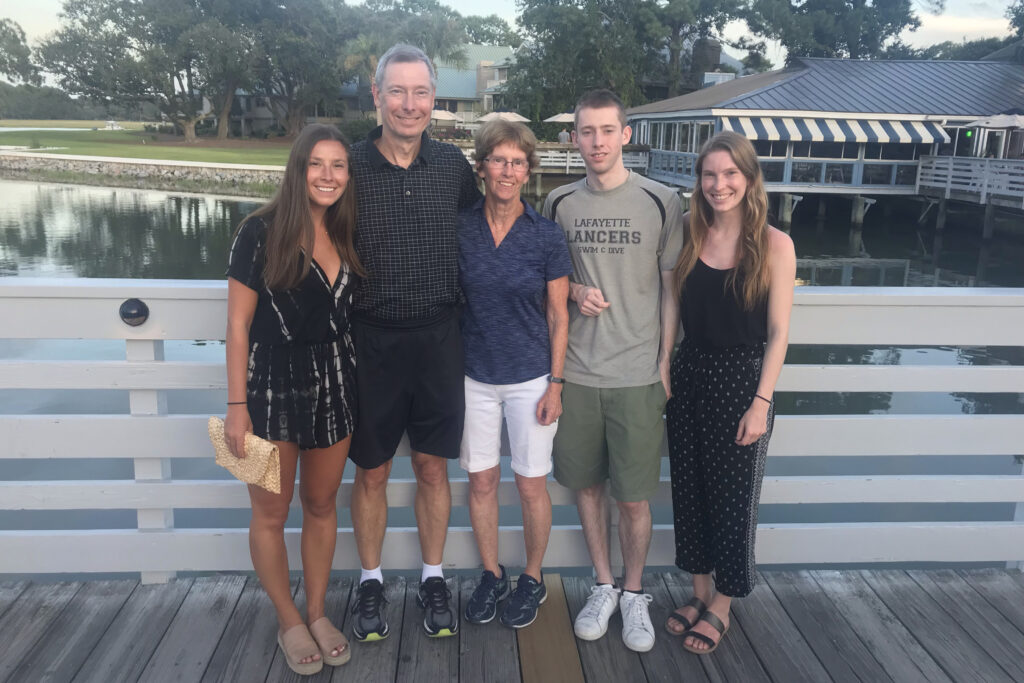
Ludwig made the gift — his first to WashU — with the blessing of his and Sue’s three children, Seth Ludwig, Jessie Ludwig Nastri, and Jenna Ludwig, and after considering what he thought Sue would want. “I think she would be completely on board,” he says.
A pharma couple
Until Sue’s Alzheimer’s diagnosis, she had been the picture of health, Ludwig says. He initially cared for her himself in their Chesterfield, Missouri, home, then brought in home care providers. But eventually, that wasn’t enough. Sue has been living in a memory care home since early 2021.
The two first met in 1989 in Greenville, North Carolina, when Ludwig began his first job at Burroughs Wellcome. Sue led a scientific team there, developing controlled drug-release systems. She had a highly successful 17-year career with the company, becoming its first female department head, before stepping back in the mid 1990s to focus on raising the couple’s children while working part-time as a community pharmacist.
Ludwig stayed at Burroughs Wellcome as a development scientist until 1995, then joined Searle in Skokie, Illinois. He and his family relocated to St. Louis in 2001. The company later became Pharmacia and was acquired by Pfizer in 2003. There, he led scientific teams and eventually became a senior vice president. During his long career, Ludwig contributed to the creation of widely beneficial products such as the Pfizer-BioNTech COVID-19 vaccine Comirnaty; the antiviral drug Paxlovid; the pneumococcal vaccines Prevnar 13 and Prevnar 20; the RSV vaccine Abrysvo; the hemophilia drug Hympavzi; the lung cancer drug Lorbrena; and many others. He retired from Pfizer in 2025 and now consults for biotechnology and venture capital firms.
He hopes his gift eventually will help other families avoid the pain endured by his own. “I hope more people will get involved,” he says. “If you have the capacity to give, then you have the opportunity to support cutting-edge research to find therapies for this terrible, chronic, fatal disease. What better use is there for those resources?”