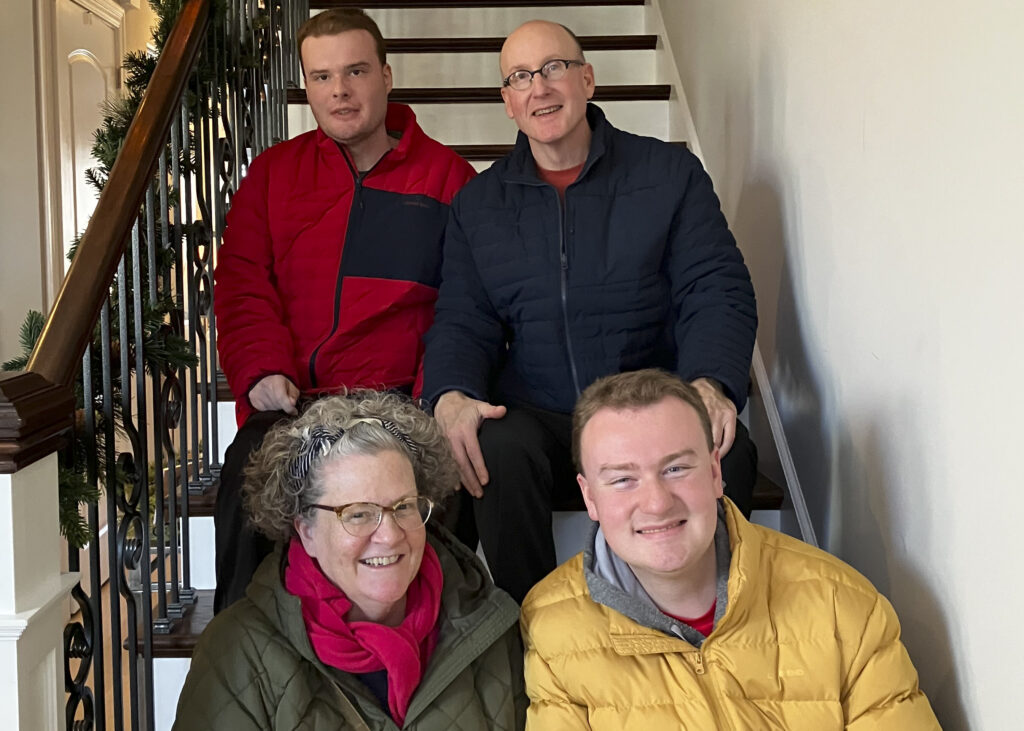
Couple’s gift transforms their family’s challenges into hope for others
By Juli Leistner
For years, parents Tom and Shari Zychinski have lived in the shadow of a looming crisis.
They have relied for more than a decade on a pediatric autism clinic at WashU Medicine to care for their younger son, George, who has complex autism-related support needs. Most critically, the Autism Clinical Center has provided specialized psychiatric care for George’s autism-related behavioral challenges, including anxiety, aggression, and mood instability — issues that periodically escalate into crisis episodes.
Tom has long understood that his son’s challenges would continue into adulthood. But although services for children with autism have become more readily available, services for adults are scarce in the St. Louis region and nationwide. Now that George is 25, the Zychinskis face a turning point.
“We’ve been told for a long time that once he hits adulthood, he’ll age out of the pediatric clinic,” Tom says. “I’ve been asking, ‘Well, what happens then?’”
He and Shari turned their personal dilemma into a broader call to action. The couple made a gift to establish the Washington University Adult Autism Clinic Support Fund. The spendable funding will support a clinic for adult patients with autism and related neurodevelopmental conditions within the WashU Medicine Department of Psychiatry’s existing Autism Clinical Center. The clinic will be the first of its kind in Missouri and southern Illinois, offering services for 50 to 100 individuals annually under the direction of Angela Lin, MD, assistant professor of psychiatry.
“Autism in America is a success story: Reduced stigma and improved detection and service availability have led to more people with autism getting diagnosed earlier in their lives and getting the help they need. But adults with autism face a service cliff, where their families cannot access the specialized and comprehensive services available to children, and many adult psychiatrists are uncomfortable providing this care,” says Eric J. Lenze, MD, the Wallace and Lucille Renard Professor of Psychiatry and head of the Department of Psychiatry. “Tom and Shari’s generous gift will enable us to address these significant gaps in care and training.”
Autism Spectrum Disorder is a developmental condition that affects communication, behavior, and social interaction. In the United States, roughly one in 31 children and one in 45 adults are diagnosed with autism, with symptoms and severity varying widely. The WashU Department of Psychiatry is leading groundbreaking research to understand the condition’s development and hopes to create more effective treatments that produce meaningful improvements in autism outcomes across the lifespan.
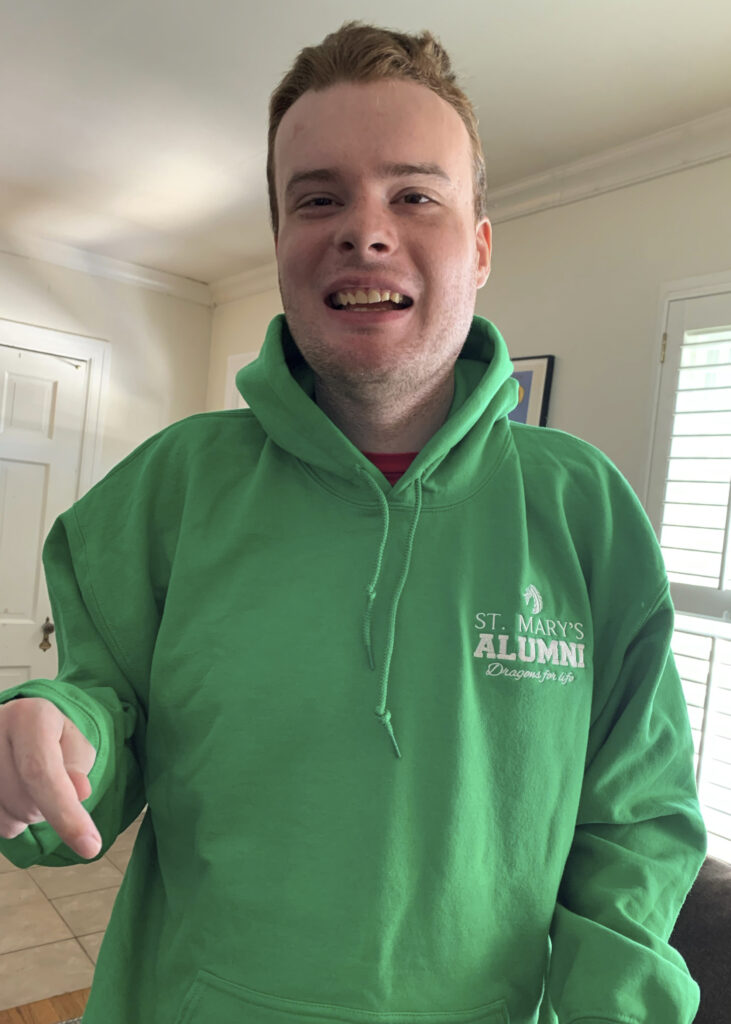
George was diagnosed at age two. Now 25 and living with his parents, he is nonverbal and requires 24-hour care, placing him at the most challenging end of the autism spectrum. He has been a patient of the WashU Autism Clinical Center since he was a young teen. The clinic team provides ongoing assessment, care coordination, advice, and continual psychiatric management for the evolving behavioral challenges that come with George’s condition.
“Years ago, there were many times I was on the phone with someone from the clinic in the middle of the night. Now, I communicate with the staff via the online portal every week,” Tom explains. “Without the lifeline of psychiatry through WashU, I’m not sure George would even be alive today.”
In 2024, Tom retired early to devote more time to George’s care and to pursue advocacy work for patients and families coping with autism. Interacting with care providers, autism support organizations, and state agencies, he has learned how steep the service cliff is for many individuals.
“There are few psychiatrists out there who treat the adult population, in part because they aren’t exposed to adults with autism in their training,” he says.
Through the new clinic, patients and families will have access to a host of services from across WashU, including specialized psychiatric care. A coordinator will help families navigate between clinical care and community-based support.
Lenze says the new clinic has the potential to become a national model for adult autism care. “With WashU Medicine’s strength in psychiatric research, clinical care, and education, we can create the model of what high-quality, comprehensive, and coordinated services should be. Ultimately, we want to ensure that individuals living with autism and related conditions have the quality of care and the quality of life they deserve,” he says.
Additionally, the clinic will train the next generation of care providers, acting as an education hub to provide immersive experience for medical students and residents, nurse practitioners, and physician assistants, ultimately making them comfortable providing adult autism care throughout their careers. WashU’s capacity to build that pipeline of skilled professionals was a deciding factor in the couple’s giving, Tom says.
“Some of the people who train at the new clinic are going to choose to serve this population. That will benefit not just my son, but all the other families who need psychiatric services and can’t get them — or at least not from someone who really understands the issues that come with this condition, how people with autism think, and what they’re going through.”
Lenze hopes to expand the clinic’s scope to strengthen school and community partnerships, extend access to underserved communities, and accelerate the pace of research and innovation. But even maintaining the pilot-phase services will require additional funding, he says.
“The challenge of meeting the lifelong needs for adults with autism isn’t going away,” says Shari. “But with the new clinic, we have a level of comfort about what the future holds, knowing there will be providers who can continue to help George as he gets older. We’re really excited to see these pieces coming together, and we hope we can bring awareness that will drive others to support this effort.”
She and Tom agree that making the gift has provided a measure of joy. “I feel lucky that we have the financial ability to do this,” Tom says. “The fact that it will serve not just my son but many other people — that is a good feeling.”